The Trap of Framing: Are You Talking to People or Your Labels?
Jan 3, 2026
If you think it's the people, you're off by half a mile!
Hi, Hylke here!
Before you read on, think about that friend who's always late.. give it a moment.. You know who i'm talking about? Good! Welcome to the Trap of Framing I’m dropping onto your screen today with a neurological tic we see all too often and i'm not just referring to our social settings, this happens at work, in your team, on a daily basis.
Probably 5 to 34 times a day
Performers for a Stereotype
Personally, i love storytelling. I'm a huge fan of The Corporate tribe by Danielle Braun and Jitske Kramer. Their view and understanding of corporate anthropology have became a foundation for the company culture programs we create at CinderMonkey.
Danielle Braun and Jitske Kramer share a powerful story about the Mursi tribe in Ethiopia and their interaction with tourists that perfectly illustrates this neurological trap.
The Mursi began to dress more 'wildly' and tourists acted more 'blunt' because neither group was looking at the actual human across from them. They were interacting with a frame. The tourists wanted 'primitive', so the Mursi gave them 'primitive' because that’s where the money was.
At most companies, yours including, the same thing happens.. it just looks different. When you frame a department as 'resistant' or 'slow', you stop asking what they actually need to succeed. You stop seeing the individuals. Eventually, that team will live up to that negative image just to keep the relationship predictable for you. It’s easier for them to be 'the slow team' than to try and break the cement of your expectations.
The same way people who (also) love structure and try to bring that to meetings are then often framed as the structured ones, therefore anything they try to add is often immediately labeled as such. Even when they're goofing around or aiming to help induce more creativty. Why? because it's incongruent with the frame(view) others created of them.
Why Your Brain Loves a Label
This isn't just a 'bad habit'; it's a neurological shortcut. Your brain is wired for recognition at speed. It draws on tacit knowledge, patterns and micro-cues, to make sense of the world. But when these shortcuts become ideological cement, they quietly kill the culture you’re trying to build.
Often times it's also useful. It's the same strategy you use to remember the tennis club. Imagine having tennis lessons and every time you go there you'd have to figure out what the tennis club looks like, what a court is and if you're at the right place. Energy draining right?!
The Friend Who is 'Always' Late
The 'always late' friend is the perfect example. Even on the days they arrive ten minutes early, you likely won't notice or you'll make a joke about it. You aren't talking to your friend; you're talking to the 'Late Frame.' In leadership, this kills trust and ownership because people feel they can never escape the cage of that impression.
The Monthly Two's: Your Reflection Guide
Two Sharp Questions:
Which 'frame' have you slapped on your most 'difficult' colleague? Is that label actually true all the time? and is it based on today's reality, or are you just defending a prized possession of a belief?
What imagine(frame) of yourself have you been actively working on to change towards others? Either at work or in your private life?
Two Actionable Insights:
Autopilot: Your brain loves autopilot, it's a great survival mechanism. This upcoming week, see if you can notice (and do it differently) the things you've started to autopilot. Whether it's the way you greet colleagues, the answers you give to how you're doing or the order in which you do things during a day
Practice Mental Liquidity: Treat your current assessment of your team like a tool that is useful today but replaceable tomorrow. If the reality changes, be the first one to change your mind. Write down the list of beliefs you have of them and see if they're still true
One Anecdote from the Dojo Floor
I remember a session where a management team had framed their creative department as 'unreliable divas.' (their words, not mine haha) Because of this, they micromanaged every deadline, which caused the creatives team roll over and wait for the micromanagement to happen, figuring their own input and ideas were going to be overruled anyway, creating the exact 'diva' behavior they feared.
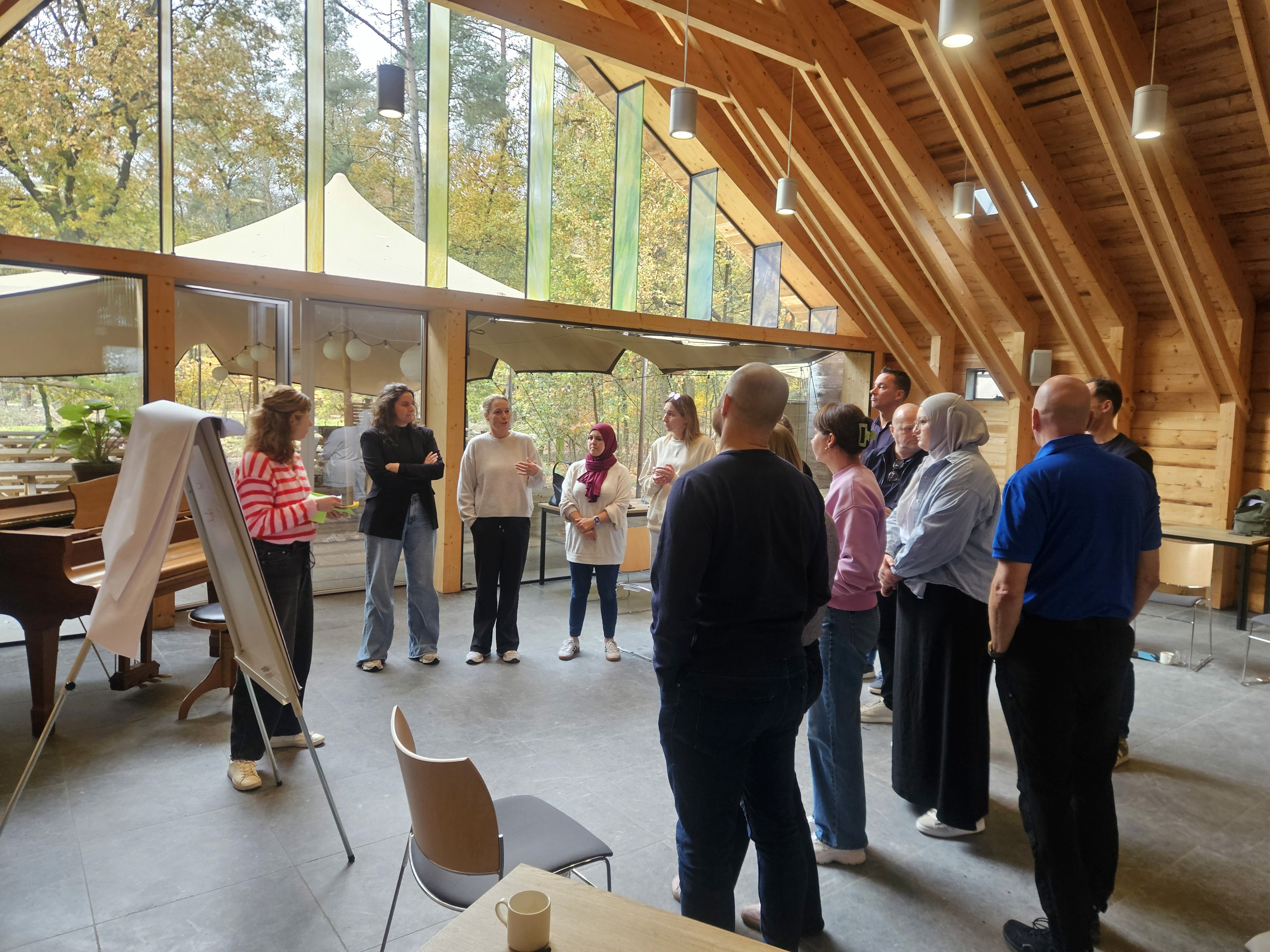
The way out? We invited both sides onto what we like to call 'the Dojo Floor'. Our go to place to break the stigma and have a radically honest and fun conversation. After addressing the facts of our brain and it's auto pilot function we started looking at the professional, regulated needs of each person, they realized the 'unreliability' was actually a lack of clear ownership. Once the frame was broken, the results followed.
Leadership transformation should be felt, but it should also be seen.
Welcome to the Tribe,
Hylke
—————————————————————————————————
If your team's culture feels like it’s stuck in ideological cement somewhere, let's break the frame together. We don't do cookie-cutter playbooks; we do tailored assessments that define the markers that actually matter, from communication quality to true ownership.
Let's sit down for a short call. We’ll look at the internal chaos together and define a regulating move to bring your team back to center.
Book your assessment session here
Or email us and tell me: "What's stuck in the ideological cement right now?''

The Highlights
Communication with Frames: We often stop talking to the actual person and start managing the "label" or frame we’ve already slapped on them.
The Mursi Effect: When we frame others, they eventually start performing for that stereotype to keep the relationship predictable, even if it’s dehumanizing.
Cultural Reality: Labeling a department as "resistant" creates a self-fulfilling prophecy where they live up to the image just to avoid conflict.
Neurological Shortcuts: Framing is often just the brain drawing on micro-cues and patterns at speed, but it can quickly turn into ideological cement.
Mental Liquidity: Great leaders treat their beliefs about others as replaceable tools, not prized possessions, allowing them to change their minds when reality shifts.
Regulated Authenticity: Breaking a frame requires slowing down to observe your own responses, enough to gain a clear view of your emotions, thoughts and behaviour and to then choose differently.